
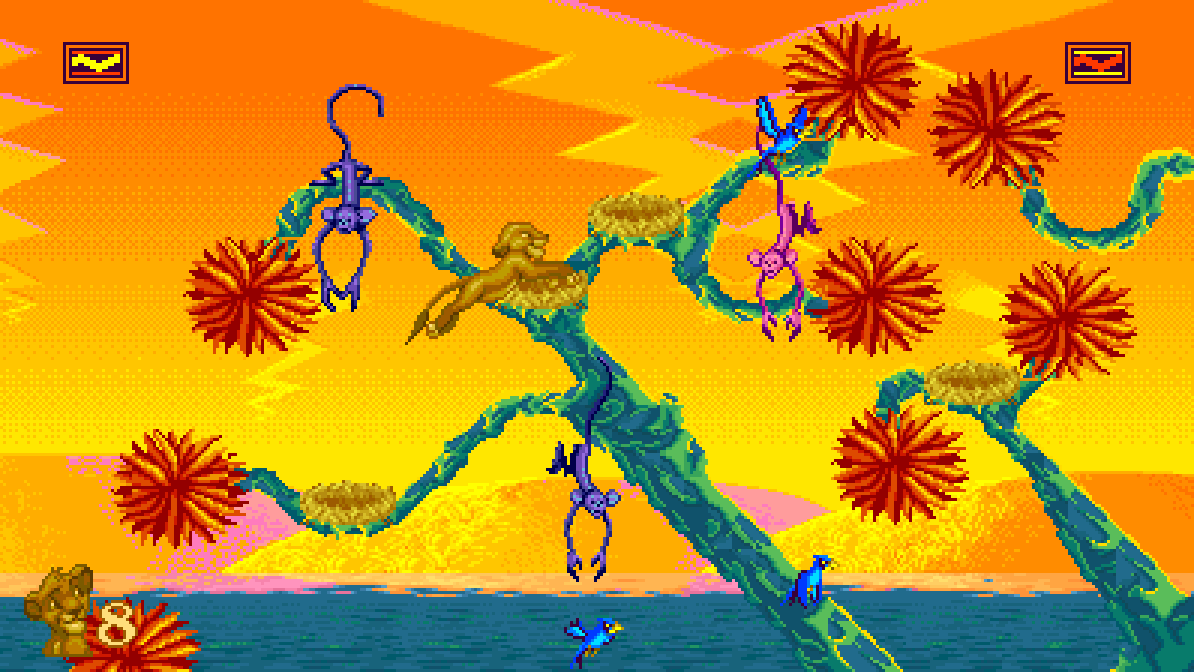
 I Just Can’t Wait to Be King in 16:9, running as native code.
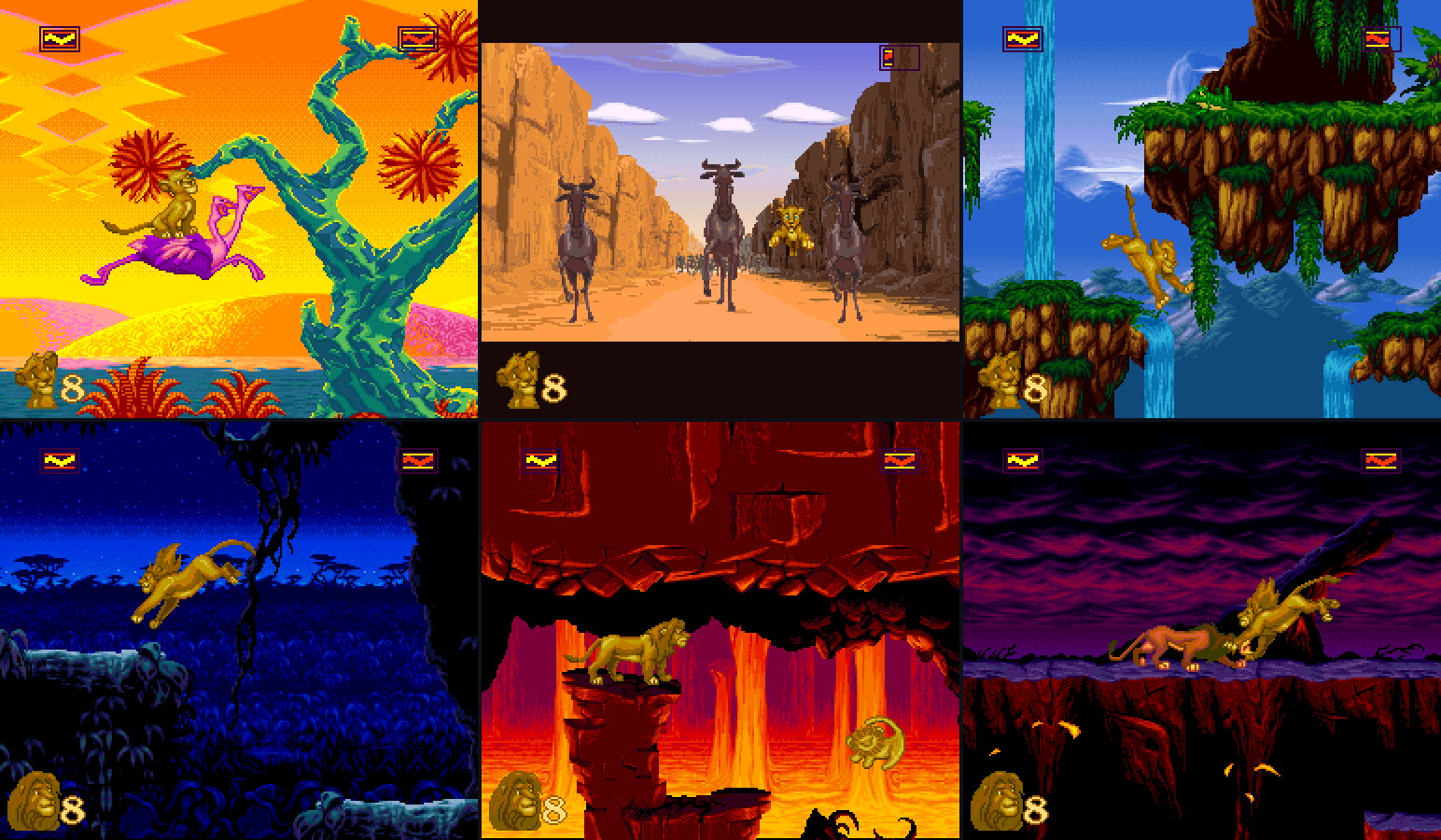
TLKRecomp ⧉ is The Lion King for the Super Nintendo, rebuilt as a native PC program. It runs on Linux, Windows and Mac, plays from the Westwood logo to the final fight with Scar, and can widen the picture to 16:9.
It took ten days, and AI agents wrote the code. They worked in a loop: try something, compare it frame by frame with the original game, find the first thing that differs, fix it, and go again.
This post explains what a recompilation is, how that loop ran, what the first broken tries looked like, what came out of it, and a detour into Donkey Kong Country.
What “recompiling” means
A SNES game is machine code for the console’s own processor. Normally an emulator runs it: a program that pretends to be that processor, one instruction at a time.
A static recompilation translates the game’s machine code into C ahead of time. A tool (snesrecomp ⧉) does the translating, and the C gets compiled for your computer like any other program. The chips that draw the picture and play the sound stay emulated, so the game still looks and sounds like the cartridge.
Once the game is C, it can be read and changed: a settings menu, a practice mode, widescreen, another game’s characters.
No game data lives in the repository. You bring your own dump of your own cartridge, and the build generates the C on your machine.
The hard part: finding the code
The translator can’t translate code it doesn’t know about. A cartridge is just bytes; nothing marks which bytes are code, where each routine starts, or what mode the processor is in when it gets there. Popular games come with a community disassembly that answers those questions. The Lion King had none.
The first run of the translator found 24 routines and stopped. The game has well over a thousand.
The way out came from speedrunners. TASVideos hosts tool-assisted speedruns of this exact ROM: every button press, frame by frame, from power-on to THE END. Played back in an emulator, a speedrun is a ghost holding the controller, and it walks the game through most of its routines. Log every routine the game enters, hand the new ones to the translator, recompile, and check the result. Then do it again with the next tape.
The speedruns did a second job too: they became the answer key. If the compiled build plays a ten-minute speedrun to the last frame with the same memory as a reference emulator (BizHawk, bsnes core), the game is right. A single wrong instruction makes Simba miss a jump and the run falls apart.
How the agents iterated
One agent session acted as coordinator. It held the plan, split the work into tasks, and handed each one to a worker agent in its own copy of the project. The tasks got letters (task C, task M, task FF) and later names (WIN, TURBO, WIDE), about forty in total. The workers were a mix of Claude, Gemini and Codex sessions.
Nothing was merged on a worker’s word. Every change had to pass the gates: run the game compiled and fully emulated, feed both the same button presses, and compare every frame and every byte of memory. Three speedruns, a 60,000-frame run that collects every bug in the game, and 71 hand-made input tapes, all compared every time.
When something differed, the routine was always the same: find the first frame that differs, then the first hardware access that differs inside that frame, then the routine that caused it. Fix it in the translator or in the emulated hardware, never with a special case for one address. Run every gate again.
The last step is a person playing it. That step caught things no gate could, as the first tries showed.
The first tries
Before recompiling anything, the agent learned how the game stores its levels by reading the raw cartridge bytes: a custom compression format, a map of 16x16 cells, a table of blocks, tiles and palettes. The first proof it understood something was this: Pride Lands, drawn straight from the ROM’s data with no emulator involved. No background yet, but the rocks are where they belong.
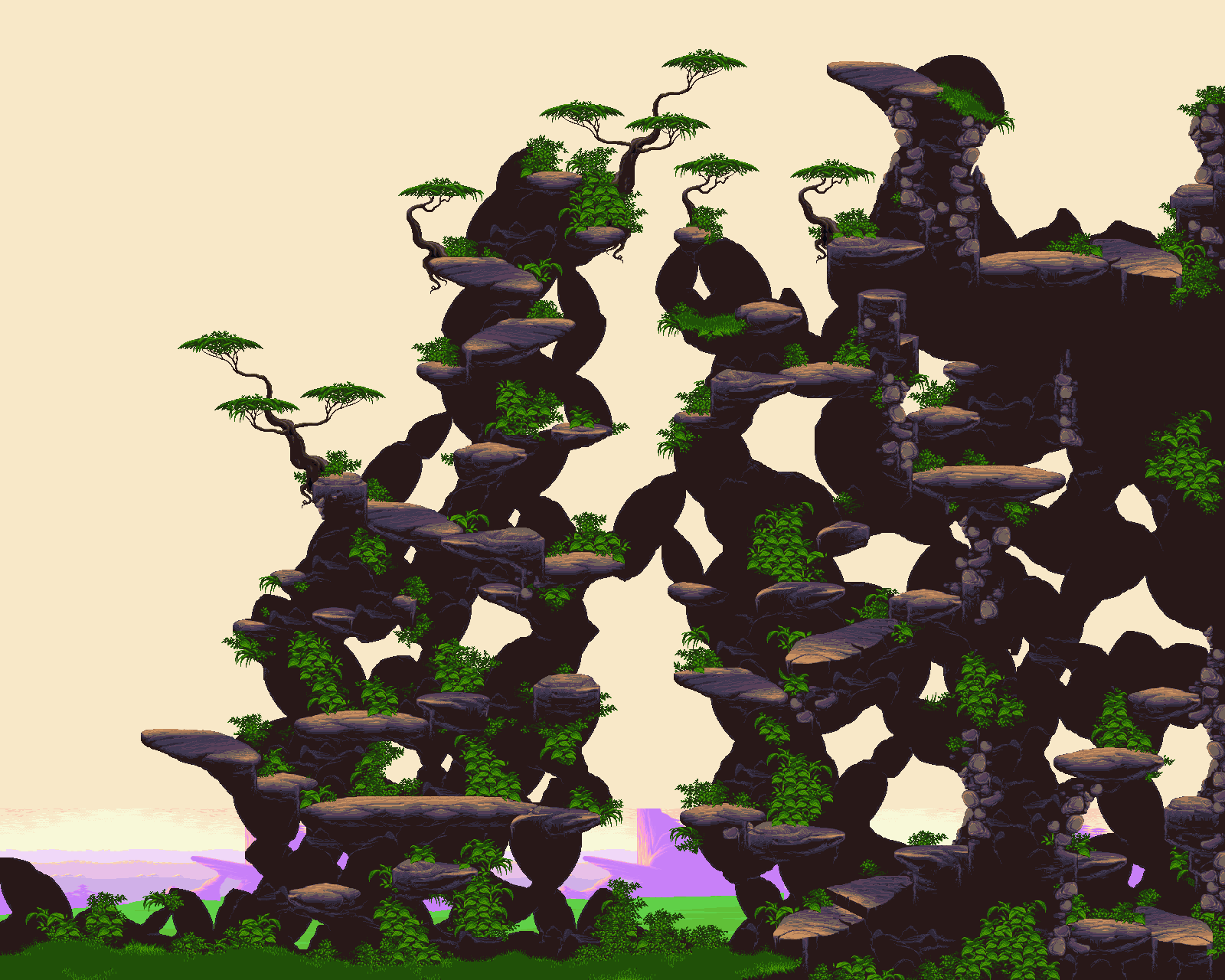 Day one: the first level, decoded from the cartridge.
It tried the same with character sprites, assembling them from the ROM without the game’s help. Some came out right. Some didn’t.
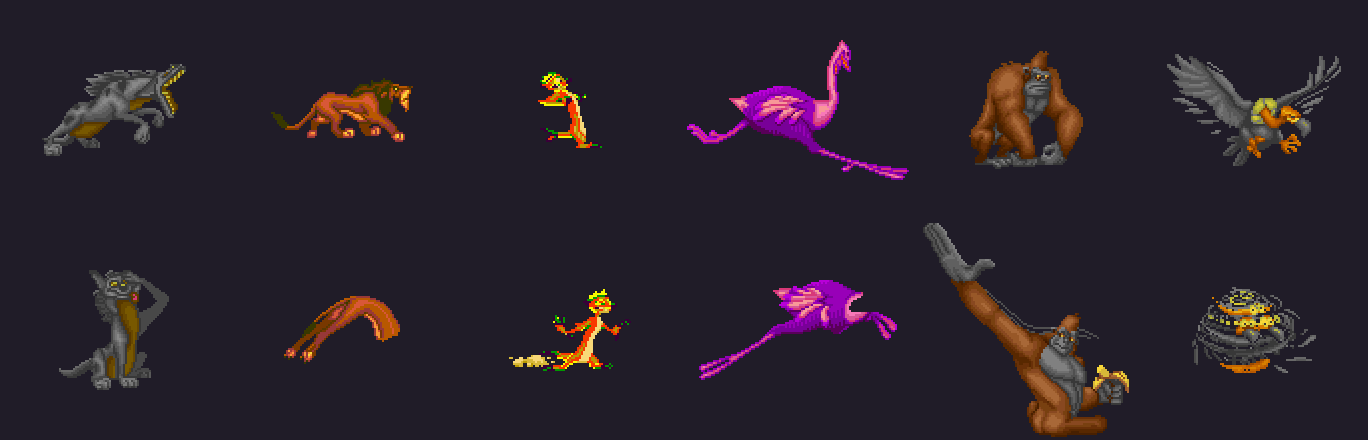 Top row: right. Bottom row: the same characters, assembled wrong.
The first pictures from compiled code were worse. A few hand-written hints about how certain routines start were wrong, and one wrong guess early in the boot scrambles everything after it. The middle frame is the emulator; the sides are the compiled build.
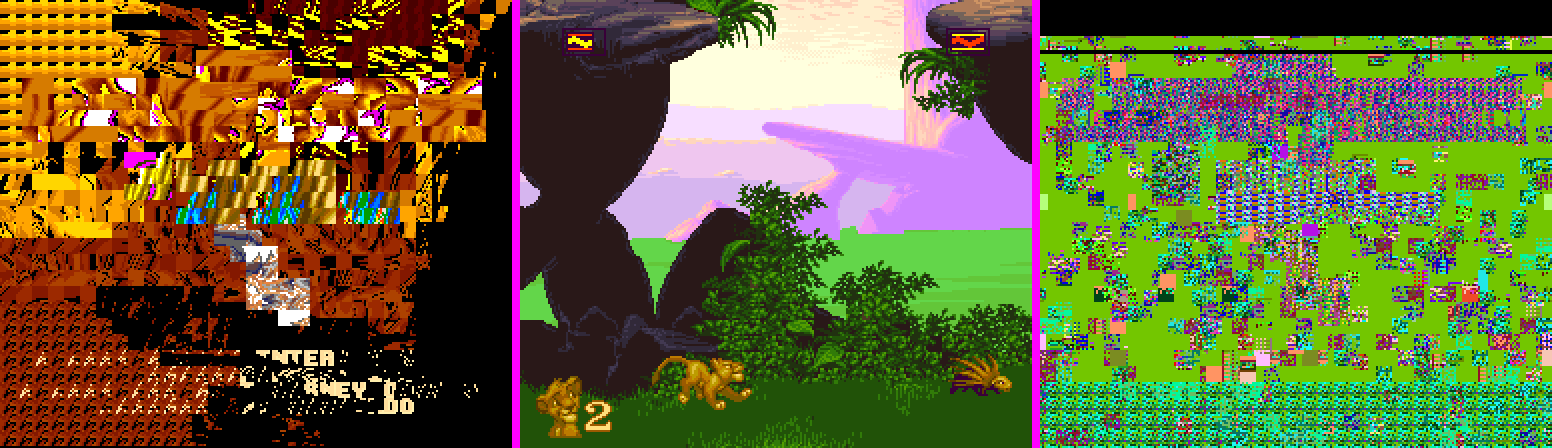 Compiled, emulated, compiled.
Then the compiled build matched the emulator: same frames, same memory, every gate green. The first real launch showed a black window.
 What the window showed, and what the tests saw.
The tests read the picture from memory, and the picture in memory was perfect. The window drew every pixel fully transparent. It was a small fix, and minutes later the game was playable with sound. From then on, no change counted as done until someone had looked at the real window.
A few more surprises along the way:
- An interrupt arrived 34 clock ticks late. Invisible on screen, but enough to shift a lag frame, and enough for a speedrun to drift out of sync thousands of frames later.
- A blue sky after drowning in I Just Can’t Wait to Be King looked like a bug. The agent replayed the same death in BizHawk frame by frame: the original game does it too.
- A missing part of the intro song. Every gate passed, because the compiled and emulated builds were wrong in exactly the same way. A listen against a reference recording found a long held note being cut short: the emulated sound chip forgot to reset a “note finished” flag, so the game’s music code reused that note’s channel early. One small patch to the emulated chip.
The features
Once the game ran, each feature started as one short request and went through the same loop:
- The whole game, start to finish, bonus stages included, keyboard or gamepad.
- Checked against real emulation: three published speedruns and the All Bugs run play back in sync, memory checked against BizHawk.
- A settings menu in the game (Tab or Esc), shared with other recomp projects.
- Shaders: CRT, LCD grid, sharpen, composite. 8:7, 4:3 or square pixels.
- Practice mode for speedrunners: level timer, splits, lag counter, input display, one-key restart.
- Level select with the debug menu’s invulnerability.
- Save states, and a turbo key that runs the game up to 16x.
- Widescreen (experimental): scenery, parallax and enemies keep going past the original edges.
- Releases for Linux (AppImage), Windows (one .exe) and Mac (.dmg).
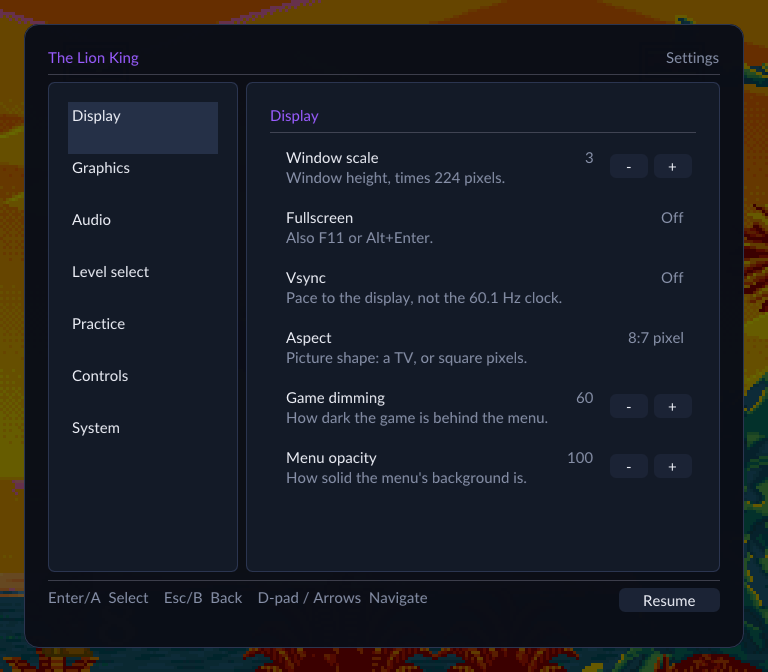 The settings menu.
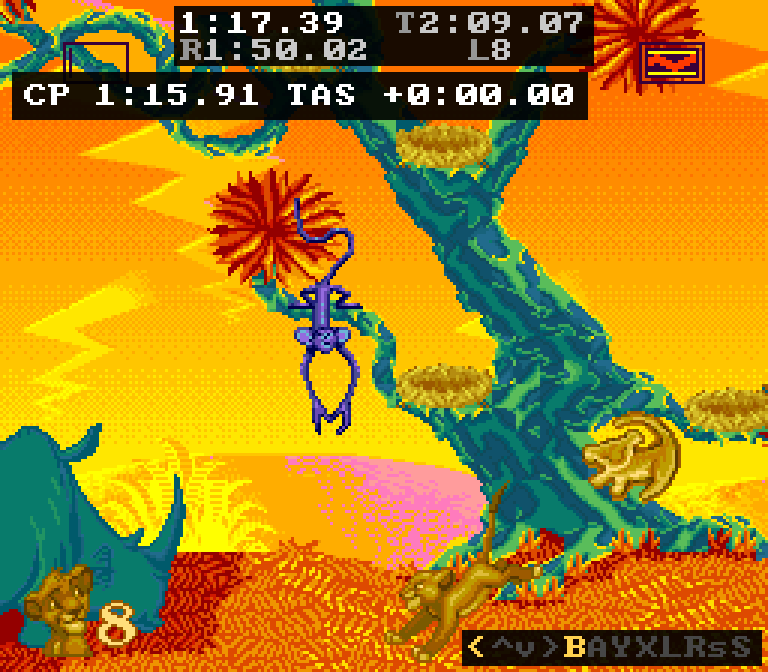 Practice mode.
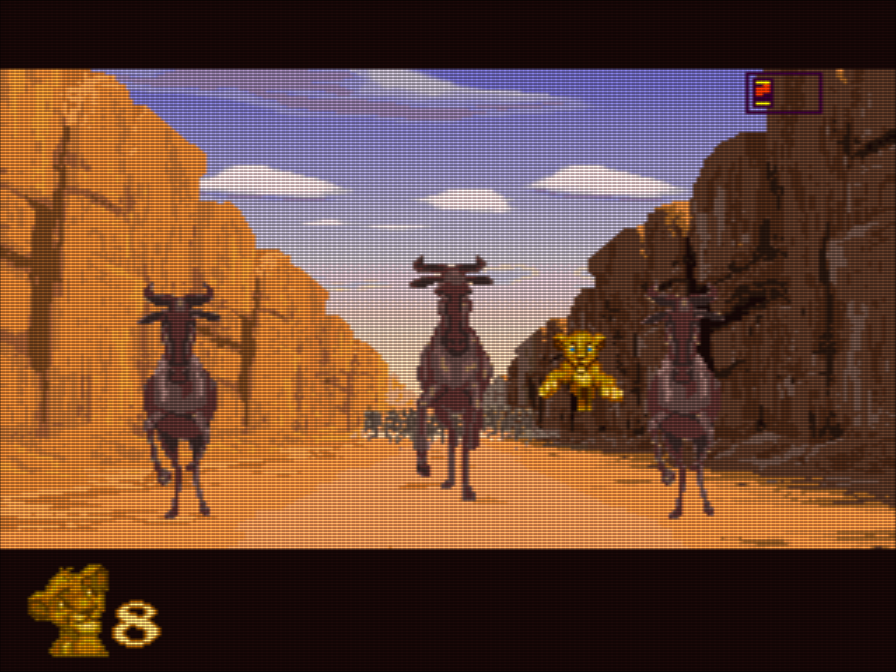 CRT shader, 4:3.
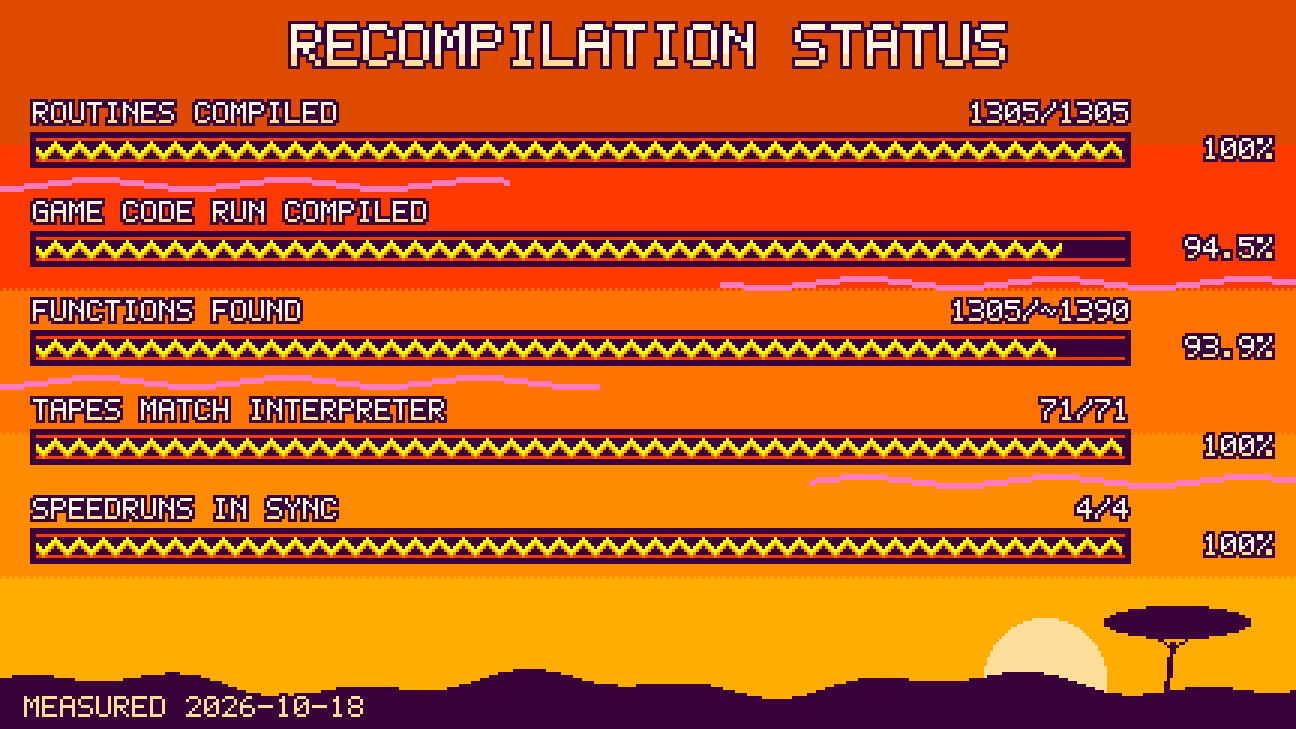
Progress is reported as a card in the colors of the game’s HUD, and every number on it names the command that measured it.
Showcase
All from the recompiled build. Widescreen first. The game only knows about a 256-pixel-wide screen; the extra picture comes from the level data it already keeps in memory.
Every level, opening up from the original 4:3 to 16:9. Unmute for the music.
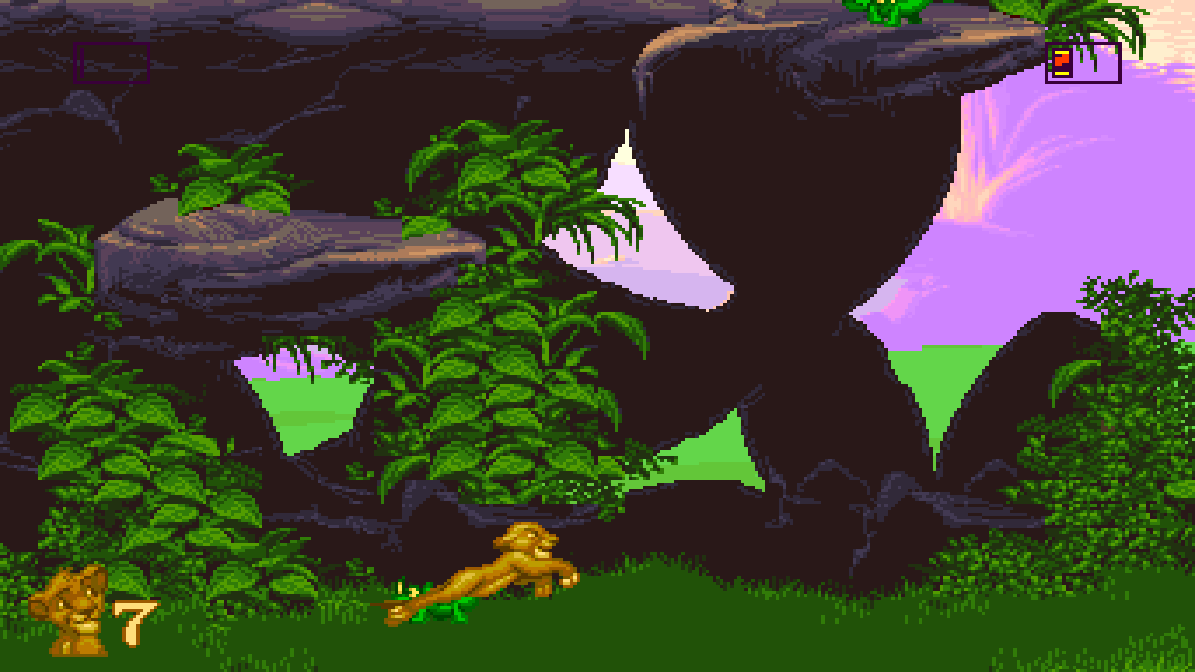 The Pride Lands, 16:9.
 I Just Can’t Wait to Be King.
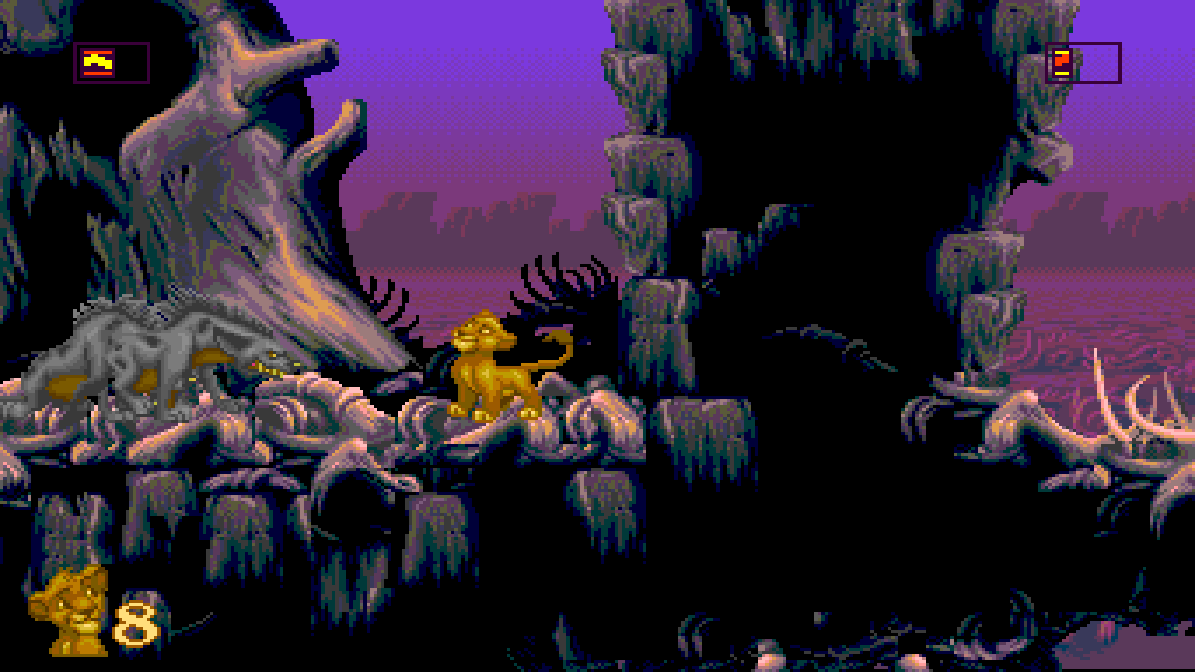 The Elephant Graveyard. Those hyenas used to be off-screen.
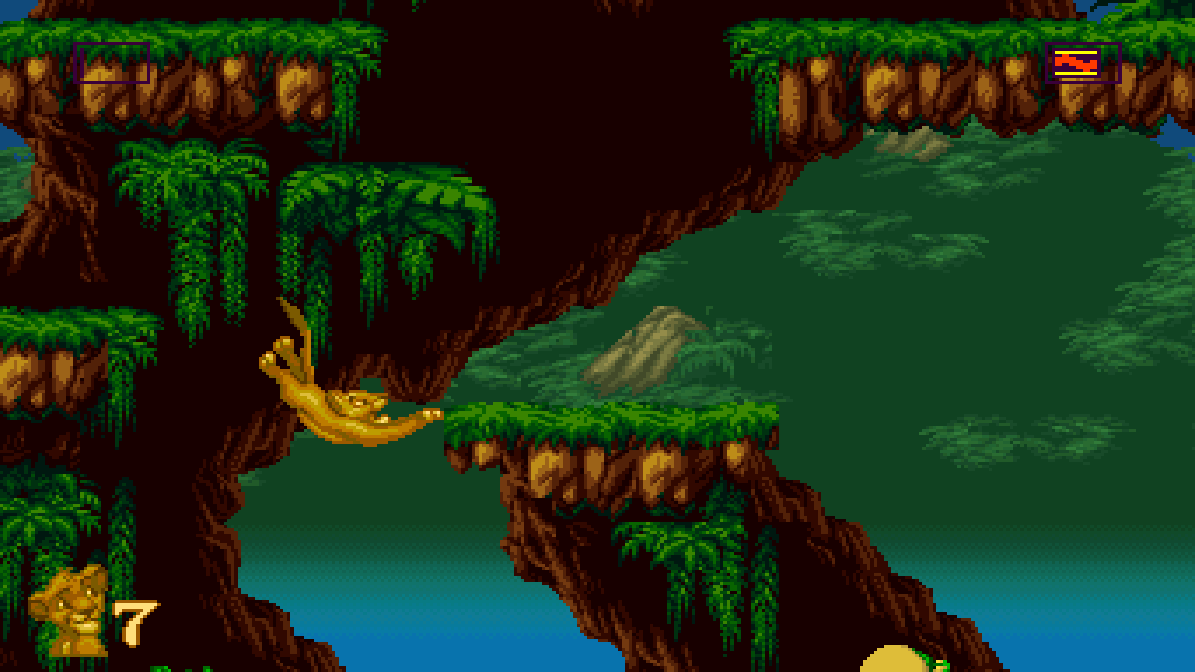 Hakuna Matata.
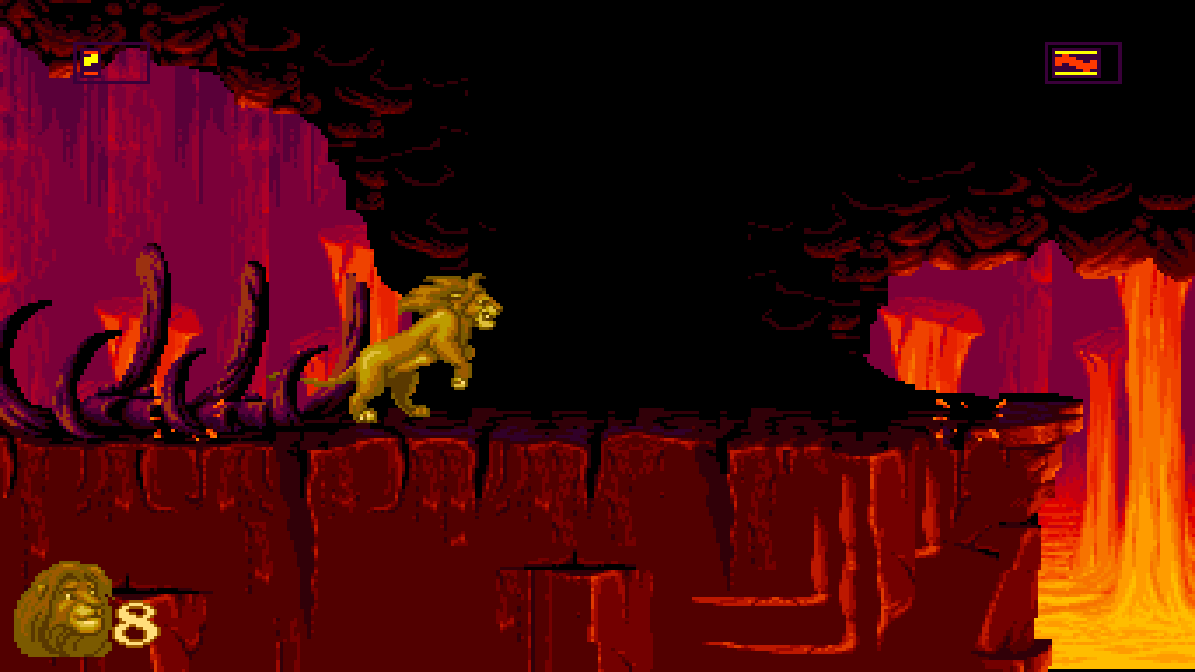 Be Prepared.
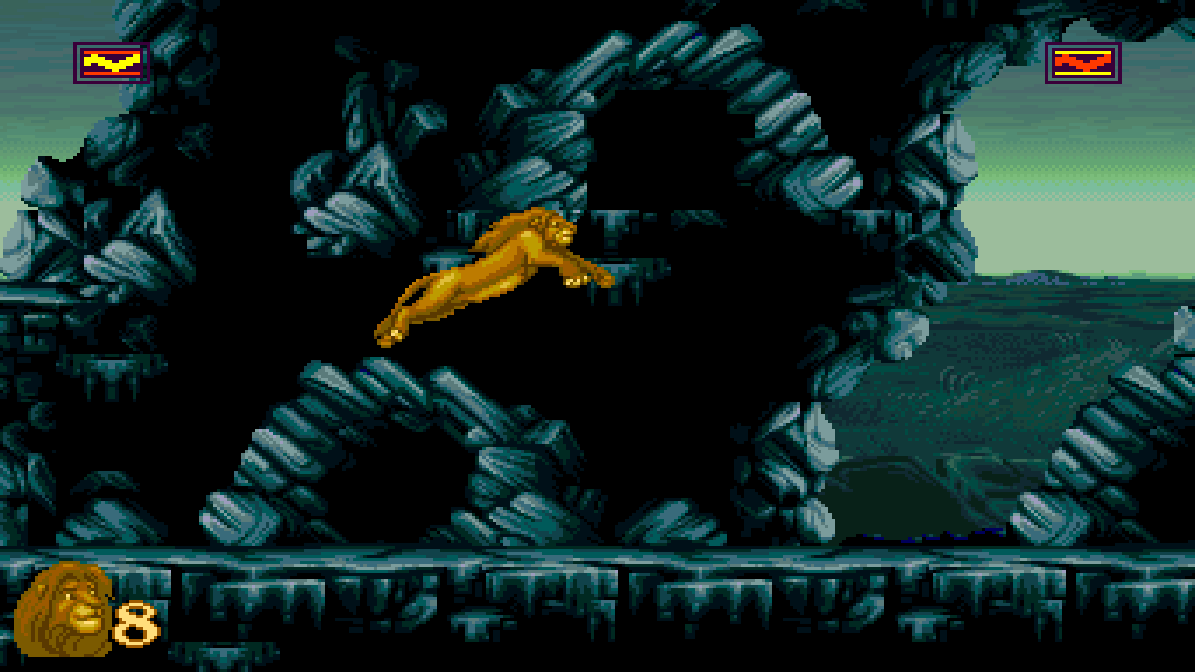 Simba’s Return.
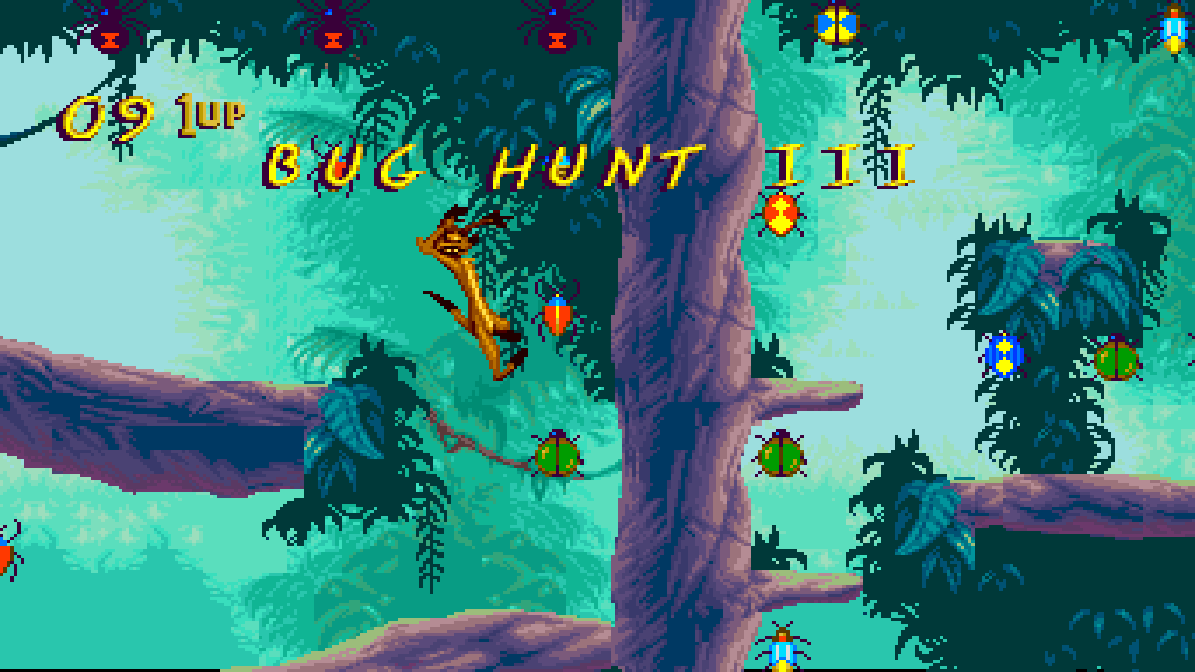 Bug Hunt III.
From the cartridge itself: the game has a hidden developer menu that fans documented years ago, and the retail cartridge still calls itself version .99.
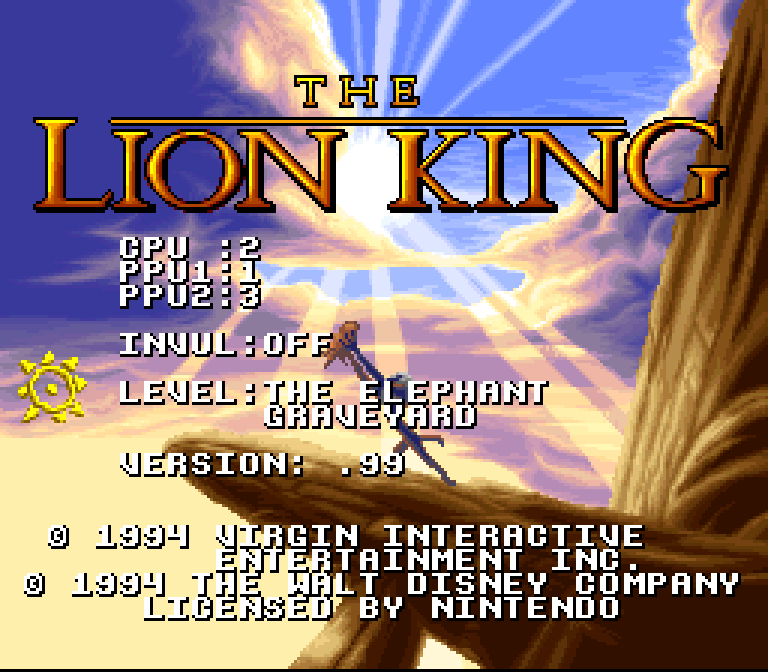 The debug menu. Version .99.
A whole level, laid out from the data the way no one sees it while playing:
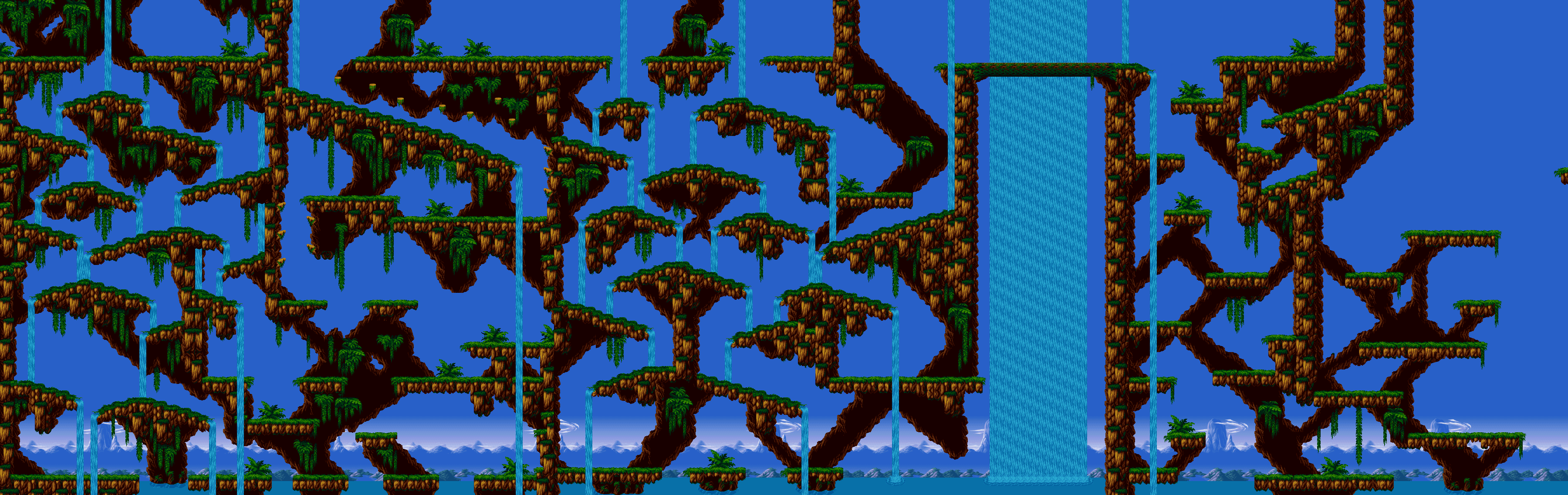 Hakuna Matata, all of it.
 The Stampede.
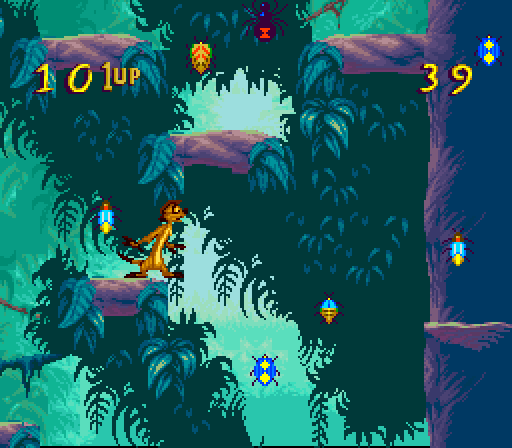 Timon’s bonus stage.
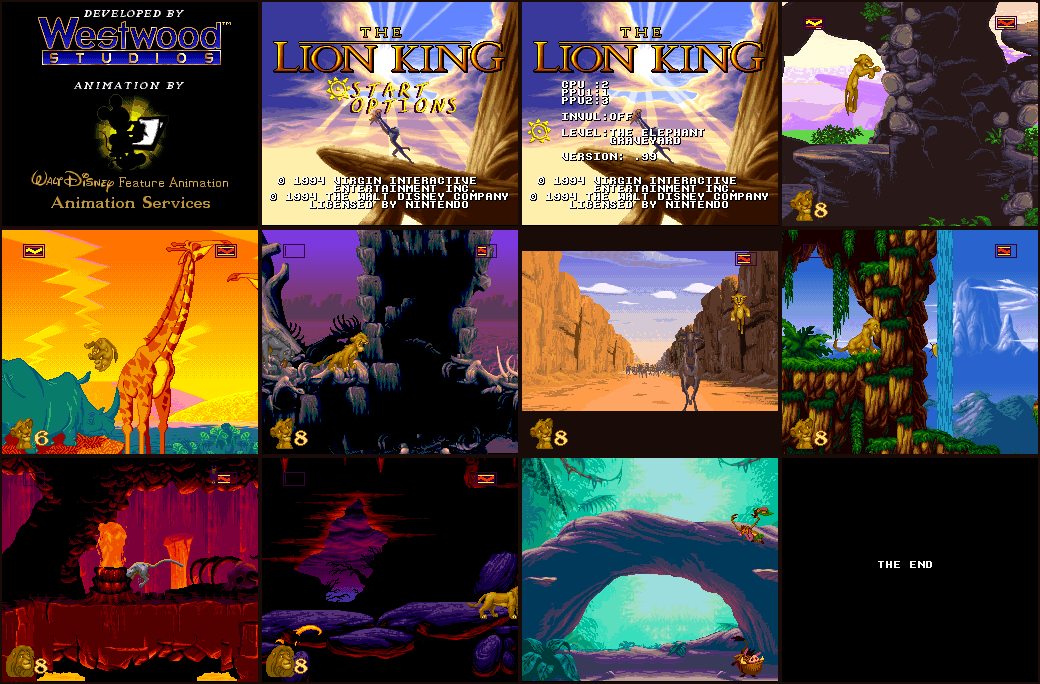 The whole journey, boot to THE END.
The Donkey Kong mashup
The project started with a different idea: Donkey Kong characters in The Lion King. A finished recomp of Donkey Kong Country 3 already existed (DKC3Recomp ⧉), so once both games were C code on the same toolkit, the two could borrow from each other.
Three agents worked on it in parallel, each on its own branch:
- Kongs in The Lion King. Dixie or Kiddy Kong replaces Simba. Their graphics are read straight from the DKC3 cartridge, drawn into Simba’s spot in video memory with their own colors, and put back after each frame is drawn.
- Simba in DKC3. The reverse: adult Simba stands in for Dixie, cub Simba for Kiddy, inside Donkey Kong Country 3.
- DKC3’s music in The Lion King. A second sound chip plays the Donkey Kong soundtrack while The Lion King keeps its own sound effects.
One rule held for all three: the skin is paint, nothing more. With the option on, the game’s memory stays byte for byte the same as with it off. Only the picture or the sound changes, so the gates still apply and the speedruns still finish.
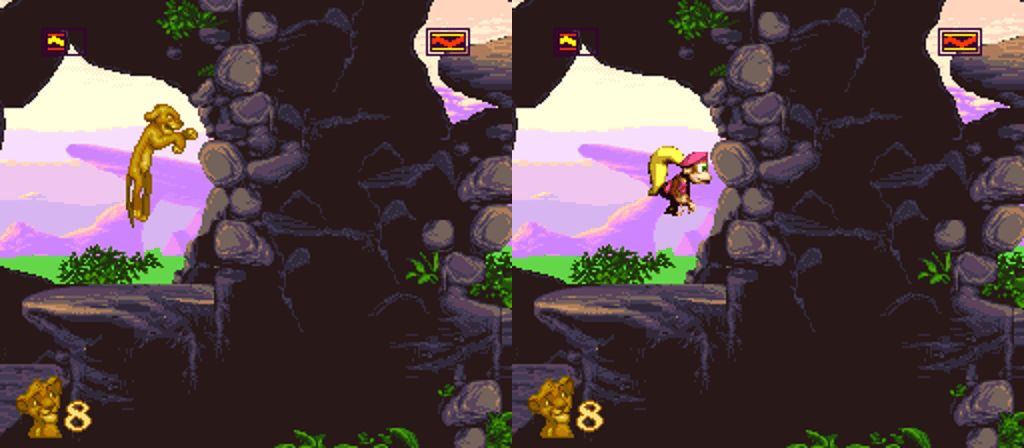 Same frame, two skins: Simba and Dixie Kong.
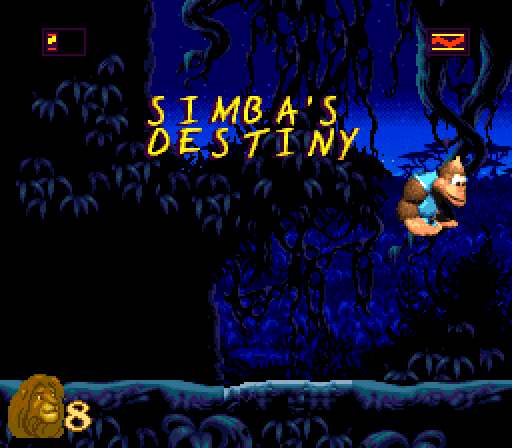 Kiddy Kong in Simba’s Destiny.
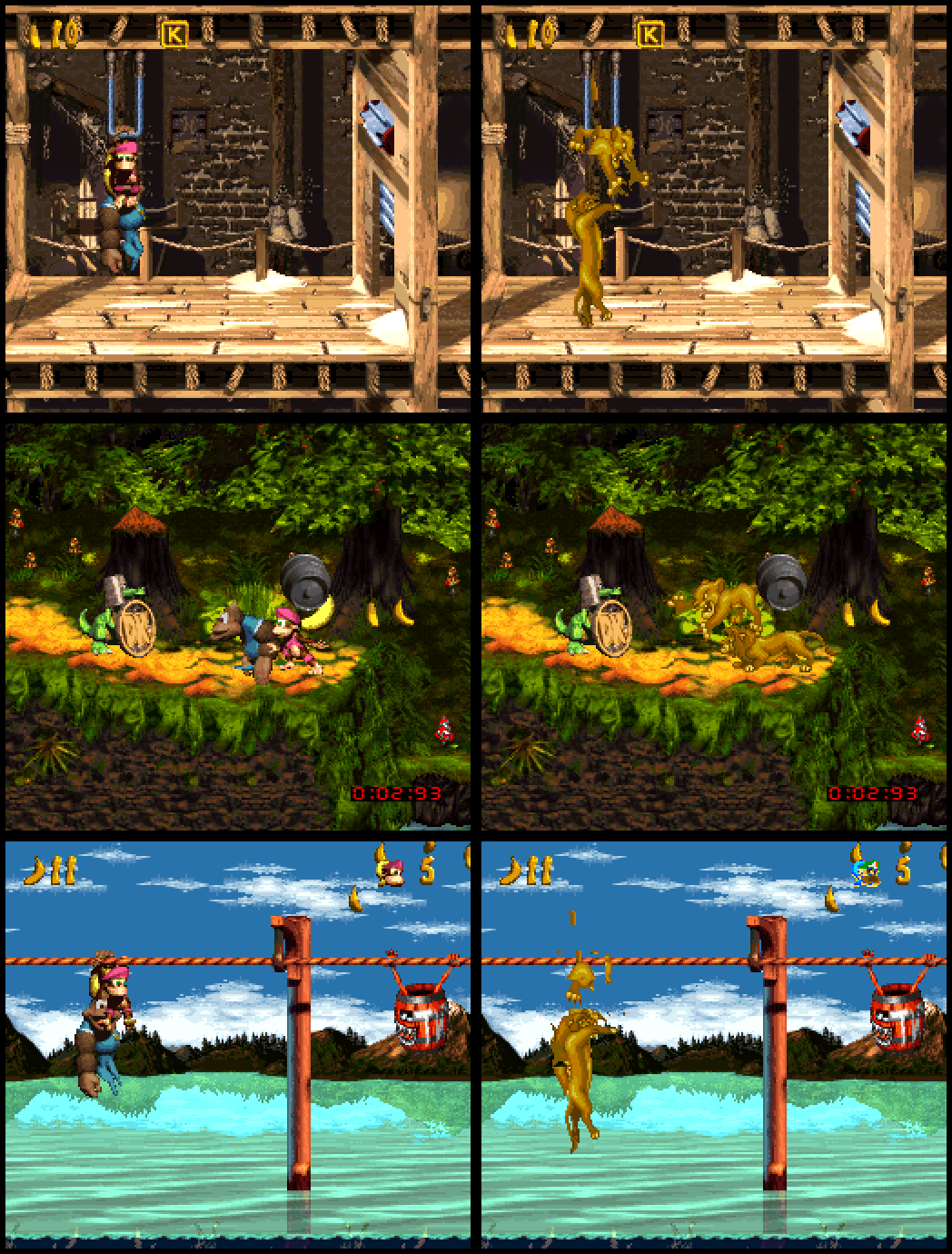 The other way round: Simba in Donkey Kong Country 3. The Kongs on the left, Simba on the right.
It’s rough. The game still runs the Kongs, so Simba moves with their physics and their hitboxes, and poses DKC3 has but The Lion King doesn’t (rolling, swimming, getting hurt) fall back to standing still. On the rope, adult Simba hangs like a stretched rug. All three live on branches, not in the release.
Thanks
To the speedrunners EZGames69, SBDWolf, Akiteru and ShgofcTAS: your runs were the map and the answer key. Your names are in the README next to your runs. And to TASVideos ⧉, which publishes those runs under CC BY 2.0 ⧉.
To BizHawk ⧉ and its bsnes core, the reference every byte was checked against.
To snesrecomp ⧉, and to its author, Matthew Stanley ⧉, for the advice and for welcoming me to the community. And to the ports that showed the way: DKC3Recomp ⧉ by elliotttate ⧉ and MegaManXSNESRecomp ⧉.
And to my family, for their patience with glitchy builds and gameplay videos recorded on my phone.
The code is at github.com/kinduff/TLKRecomp ⧉, and downloads are on the releases page ⧉. Bring your own cartridge: the repository holds no ROM and no game data, and the project is never sold. snesrecomp’s license allows noncommercial use only.